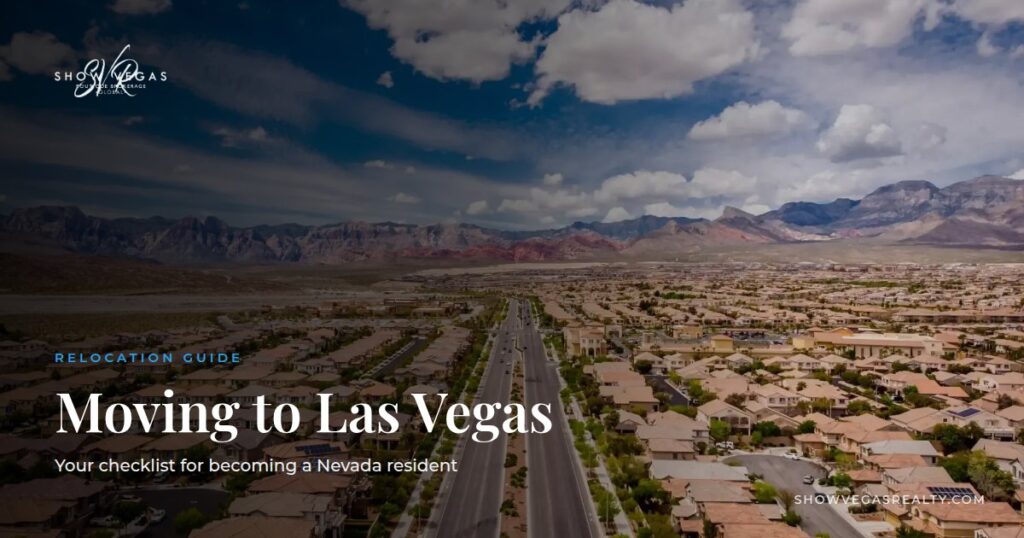

Every month, thousands of people decide to make Las Vegas their permanent home. They come for the sunshine, the lower cost of living compared with coastal cities, a growing job market, world-class dining and entertainment, and Nevada’s tax advantages. If you are planning a permanent move, a little preparation makes the transition much smoother. Here is our practical checklist.
1. Before you move: choose the right part of the valley
Las Vegas is really a collection of very different areas. Summerlin in the west offers master-planned villages, parks and trails near Red Rock Canyon. Henderson in the southeast is known for safe, established neighborhoods, golf communities and Lake Las Vegas. The Northwest (Skye Canyon, Centennial Hills, Providence) offers newer homes at more accessible prices, and the Strip corridor has luxury high-rise living.
- Visit before you buy. Spend a weekend driving your commute at rush hour and visiting neighborhoods at night.
- Check HOA rules and fees. Most newer communities have an HOA, and fees and rules (landscaping, rentals, parking) vary widely.
- Research schools. Most public schools are part of the Clark County School District; zoning is by address, so confirm schools for the exact home you are considering.
- Explore our Neighborhood Guide to compare communities side by side.
2. Plan the move around the weather
Las Vegas summers are hot, with many days above 100°F from June through September. If you can, schedule your move for spring or fall. If you must move in summer, book movers for early morning, keep water and essentials with you, and have power and air conditioning turned on before moving day.
3. Set up utilities one to two weeks ahead
- Electricity: NV Energy serves the entire Las Vegas Valley.
- Natural gas: Southwest Gas. Many homes are all-electric, so check whether you need it. Service requests should be made a few days before move-in.
- Water: Las Vegas Valley Water District for Las Vegas and unincorporated Clark County; Henderson and North Las Vegas have their own city water services.
- Trash and recycling: Republic Services in most of the valley.
- Internet: compare providers for your exact address, since availability varies by street.
4. Your first 30 days: the DMV deadline
This is the one most newcomers miss. According to the Nevada DMV, new residents must get a Nevada driver’s license and register their vehicles within 30 days of becoming a resident. To prepare:
- Switch to auto insurance from a Nevada-licensed carrier. Out-of-state policies are not accepted for registration.
- Most gasoline vehicles in Clark County need a smog check, and out-of-state vehicles need a VIN inspection.
- Book a DMV appointment early and bring your title, proof of identity, and two proofs of your Nevada address.
- Late registration carries monthly penalties, so do not leave it to the last week.
5. Make your residency official
- Declaration of Domicile. You can file a sworn Declaration of Domicile with the Clark County Clerk (the filing fee is $5). It is a helpful piece of evidence that Nevada is your permanent home.
- Register to vote in Nevada and update your address with banks, the IRS, the USPS and your employer.
- Cut the ties properly. If you are leaving a high-tax state like California, keep records showing your move: your Nevada license, voter registration, home purchase and where you spend your time. Talk to a tax professional about ending residency in your old state.
6. Protect your new home
- Record a Declaration of Homestead. Nevada’s homestead law protects up to $605,000 of equity in your primary home from most creditors. You record the declaration with the Clark County Recorder for a small fee.
- Claim the 3% property-tax cap. Nevada limits annual property tax increases on your primary residence to 3% (other properties can see up to 8%). After you buy, watch for the Assessor’s tax cap notice and make sure your home is designated as your primary residence.
7. Understand the money side
Nevada has no state income tax, which is a major reason people relocate here. Keep in mind that the combined sales tax in Clark County is 8.375%, and budget for HOA dues, summer electricity costs, and pool and landscaping maintenance if your home has them.
8. Settle in like a local
- Embrace desert living: water-smart landscaping, a shaded patio and a good sun routine go a long way.
- Get outside: Red Rock Canyon, Mount Charleston, Lake Mead and Valley of Fire are all within an easy drive.
- Find your community: Las Vegas is remarkably diverse, with active cultural and language communities throughout the valley.
Let us help you make Las Vegas home
Show Vegas Realty helps families, professionals and investors relocate from across the country and around the world. We can arrange video tours, help you compare neighborhoods and schools, coordinate a remote closing, and introduce you to trusted lenders, inspectors and movers. We work in English, Russian, Armenian and several other languages.
Book a free relocation consultation · Call (702) 505-3233
This article is general information, not legal or tax advice. Requirements and fees can change; please confirm details with the Nevada DMV, Clark County and a qualified professional.